
Repository Metadata

How to read public repository signals.

Repository metadata can show public activity, structure, and maintenance surface. It is useful context, not evidence of deployment quality or customer outcomes.

public signals / repository activity / maintenance surface / open-source context / claim boundary
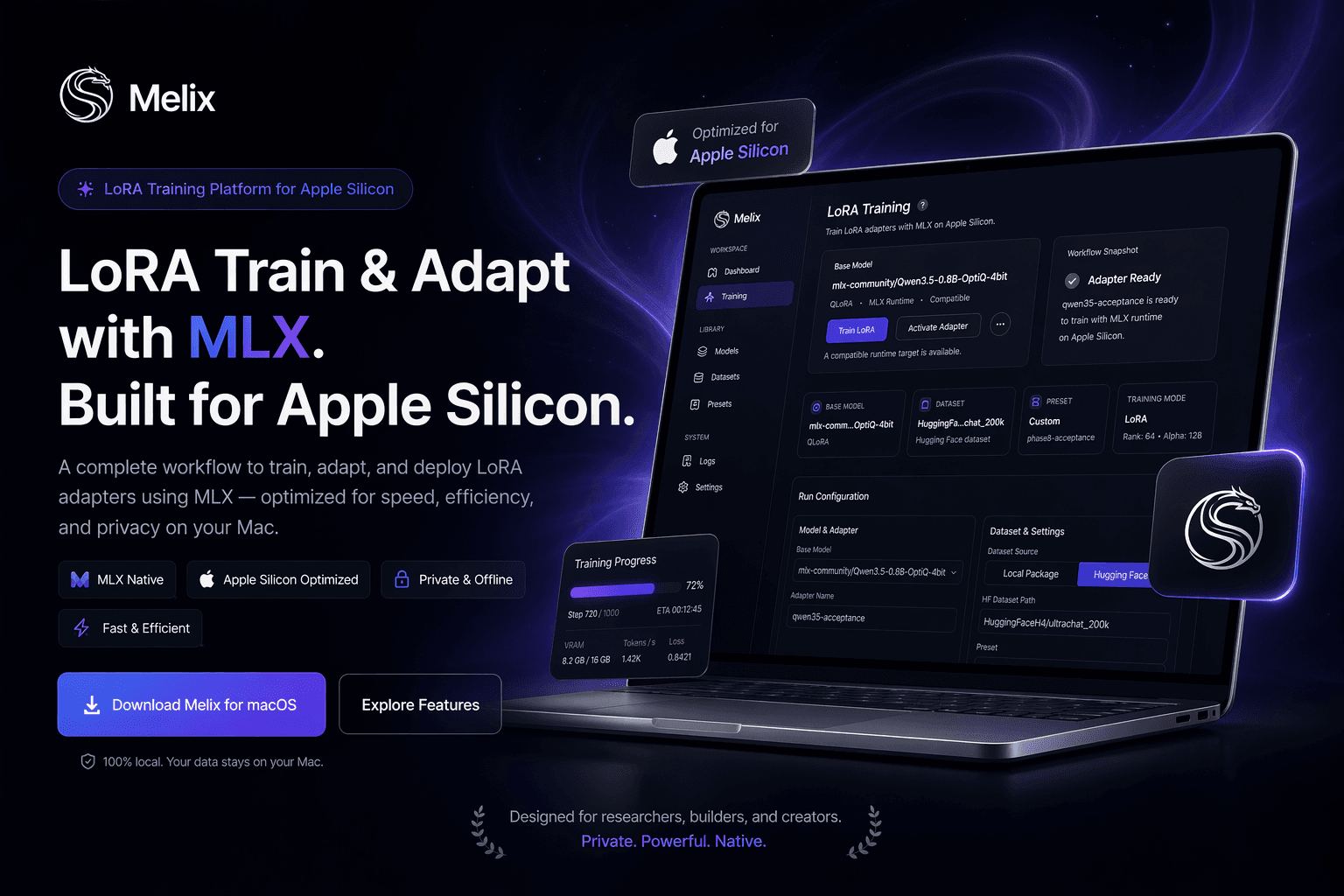
Melix product cover showing a LoRA training workflow optimized for Apple Silicon

01

Activity context

Commits, releases, and tags can show visible project movement.

02

Structure signal

Folders, examples, and documentation show how the repository is organized.

03

Maintenance surface

Issues and pull requests show public discussion and review entry points.

04

Claim boundary

Repository signals do not prove customer deployment or operational quality.

05

Better questions

Metadata helps readers ask sharper technical questions before scoping work.

Frame

Read metadata as context

Public repository metadata is a starting point for interpretation, not a conclusion about product maturity.
  • Activity does not equal readiness
  • Stars do not equal adoption
  • Issue volume needs context
  • Public code is separate from delivery
ChatGPT generated Titan-inspired heavy neo-engraved clamped archive case image about evidence and durable technical records

Can show

What metadata can show

Metadata can make public project movement, structure, and collaboration surfaces easier to inspect.

  • Visible activity cadence
  • Release and tag patterns
  • Repository structure and examples
  • Public issues and review surfaces

Cannot show

What metadata cannot show

Repository metadata cannot prove private implementation quality, customer outcomes, or environment-specific behavior.

  • Deployment quality in a customer environment
  • Security or compliance posture
  • Customer adoption or satisfaction
  • Private runtime performance
ChatGPT generated placeholder Titan-inspired heavy neo-engraved nested boundary seal image

Use

How Random Walk uses it

Repository signals help make open-source reference work inspectable while keeping service claims separate.

  • Show public engineering direction
  • Expose reference artifacts for review
  • Separate repository context from service delivery
  • Support technical conversations before scoping

Inspect

Useful signals to inspect

A repository can be read through a few visible surfaces without turning them into a score.

  • Releases and tags
  • Commit history
  • Issues and pull requests
  • Documentation and examples
ChatGPT generated placeholder Titan-inspired heavy neo-engraved balance scale image for evaluation evidence

Restraint

Read with restraint

The useful question is whether the visible signals match the stated role of the project.

  • Compare claims with visible artifacts
  • Treat missing metadata as a question
  • Treat popularity as a weak signal
  • Ask what the repository demonstrates

Boundary

Repository versus implementation

A public repository may be a reference artifact. Customer implementation is scoped separately.

  • Customer environments vary
  • Runtime assumptions may differ
  • Data and access paths are scoped
  • Handoff expectations are project-specific

Boundaries

What this resource is not

This resource is an interpretation guide, not a rating system or formal assessment.

  • Not a GitHub popularity ranking
  • Not a security audit checklist
  • Not a procurement scoring rubric
  • Not customer deployment evidence

Takeaway

Use signals to ask better questions

Repository metadata is useful when it sharpens the next technical conversation instead of replacing it.

  • What is the project meant to show?
  • Which signals support that role?
  • Which claims need separate scoping?
  • Which gaps need direct discussion?

Boundary check

Public context, not private implementation evidence.

Read repository metadata as a public signal layer. Use it to understand open-source reference work and prepare better technical questions.

Bring the repository, intended use, deployment boundary, and questions that need technical scoping.

System signals

  • You want to interpret open-source project signals with restraint.
  • You are reviewing reference work such as Melix.
  • You need public context before a scoped technical discussion.

Boundary limits

  • You want a production certification guide.
  • You need a security audit or procurement checklist.
  • You expect repository metadata to prove customer outcomes.